
blog details
28
Dec
Structural Beam Repair: Causes, Methods, and Best Solutions
Reinforced concrete structures consist of a set of primary load-bearing elements, including slabs of various types, beams, columns, and foundations. These structures also include supplementary elements such as tie beams and retaining walls, especially in basements.
The connections between beams and columns may be tight, forming frames, particularly in important structures with wide openings such as halls and other buildings. There are also structural elements specifically designed to resist earthquakes, such as shear walls and frames capable of withstanding the large horizontal forces generated by earthquakes.
In this article, we will review the signs of weakness or deterioration that may appear in reinforced concrete elements, whether in slabs, columns, or foundations, and the best ways to structural beam repair.
Reasons for beam cracking and the need for repair
Cracks in concrete columns are a common phenomenon resulting from several causes, most notably excessive loads, thermal shrinkage, exposure to harsh environmental conditions, or the use of substandard materials. These cracks require prompt intervention for repair and restoration to preserve the structure's integrity. Cracks may be superficial or extend deep into the concrete, and they vary in size and impact on the structural strength of the concrete. Some of the most important types of concrete column cracks include:
- Diagonal slant cracks
- Diagonal cracks in concrete columns appear across the entire column face and may occur at any point along its length or height. The primary cause is insufficient load-bearing capacity of the column, resulting from a small cross-section or inadequate reinforcement. Horizontal forces from earthquakes or wind, if not carefully considered during design, can also contribute to this type of cracking, necessitating the rapid structural beam repair.
- Overload cracks
- Overload cracks in reinforced concrete columns are short vertical cracks.and parallelColumns with irregular widths. Columns with insufficient reinforcement or poor quality concrete are more prone to this type of cracking, which usually occurs when the column reaches its maximum load-bearing capacity.
- Corrosion and rust cracks
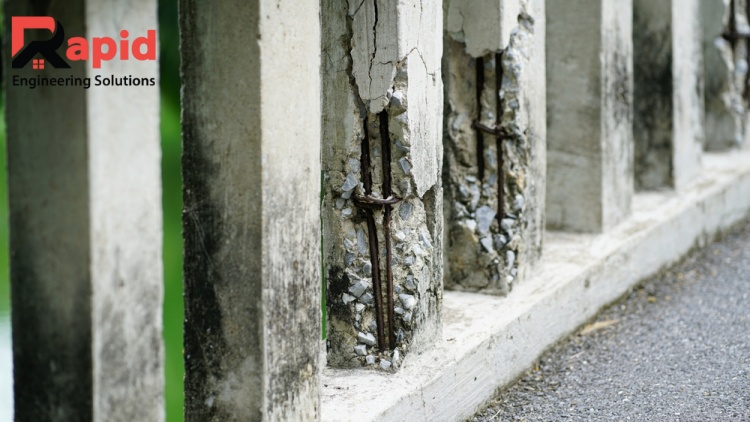
- Corrosion and rust cracks appear along the path of the reinforcing bars inside concrete columns, and are often close together and uniform in width, with a tendency to widen over time and increase the age of the structure. Continuous exposure to moisture, insufficient concrete cover, and weak bonding between the reinforcing steel and the concrete are among the most important reasons leading to the appearance of this type of crack. Therefore, it is necessary to structural beam repair.
Read more about : thermal insulation company
Types of cracks in concrete beams and their dangers
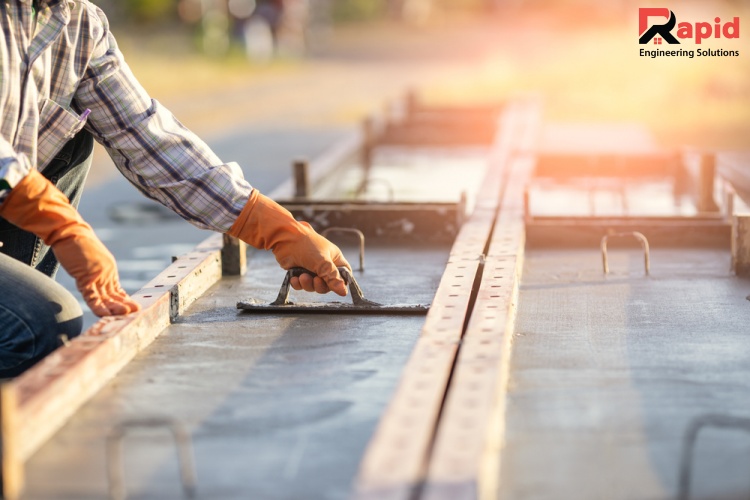
Before addressing cracks in concrete beams, it's essential to understand the different types of concrete cracks. These are common problems that directly impact the durability of concrete structures, whether in buildings or pavements. These cracks arise from various factors, most notably shrinkage, excessive loads, and environmental influences. Below, we outline the most common types of cracks that can affect concrete:
- Plastic Settlement
- Plastic sludge occurs when water migrates from concrete into the soil, causing fine particles to settle and accumulate in the lower layers. This results in premature cracking, especially over reinforcing steel or in areas of varying thickness.
- Plastic shrinkage
- Plastic shrinkage occurs when concrete loses water rapidly during the initial stages of pouring and drying, resulting in fine surface cracks. This type of shrinkage is more likely to occur in hot weather or with direct exposure to wind, so early intervention and reinforcement of concrete beams are recommended to prevent further damage.
- Early Thermal Contraction
- Premature thermal shrinkage results from a drop in concrete temperature in the early stages after pouring. Rapid cooling leads to uneven volume shrinkage, causing cracks to appear on the surface or within the concrete structure. This type of shrinkage can be minimized by using materials and treatments that reduce thermal shrinkage.
- Long-term drying shrinkage
- This type of shrinkage occurs due to the concrete losing water over a long period of time, which leads to cracks appearing over time, especially in elements that are constantly exposed to air.
- Mosaic cracks (Crazing)
- Mosaic cracks result from the rapid drying of the concrete surface, and appear as a fine network of surface cracks that affect the overall appearance more than the structural effect, so it is necessary to structural beam repair.
- Corrosion of Reinforcement
- Reinforcement corrosion occurs when reinforcing steel is exposed to moisture or salts, leading to rusting and an increase in the size of the steel, and consequently cracking of the concrete cover and weakening the durability of the concrete element.
- Alkali-Aggregate Reaction
- This reaction occurs when alkaline materials in cement react with certain minerals present in the aggregate, leading to internal expansion, cracking, and gradual deterioration of the concrete.
- Expansion cracks
- Extension cracks occur as a result of the expansion of materials within the concrete, leading to internal stresses that appear as cracks in the concrete structure, requiring appropriate intervention to treat them and maintain the integrity of the structure.
These different types of cracks illustrate the nature of the problems that may affect concrete, and each type requires special methods of prevention and treatment to structural beam repair to ensure that they are repaired correctly and to maintain the long-term durability of the concrete structure.
Restoration of concrete structures exposed to corrosion
If you are looking to strengthen concrete columns to accommodate increased loads, whether due to the addition of new floors, design errors, weak concrete compressive strength, or insufficient reinforcement ratio and quality compared to standard specifications, there are effective solutions to achieve this.
Strengthening columns is also necessary if there is a slope greater than permitted by the code, or if there is settlement in the foundations. The following are the best methods for structural beam repair:
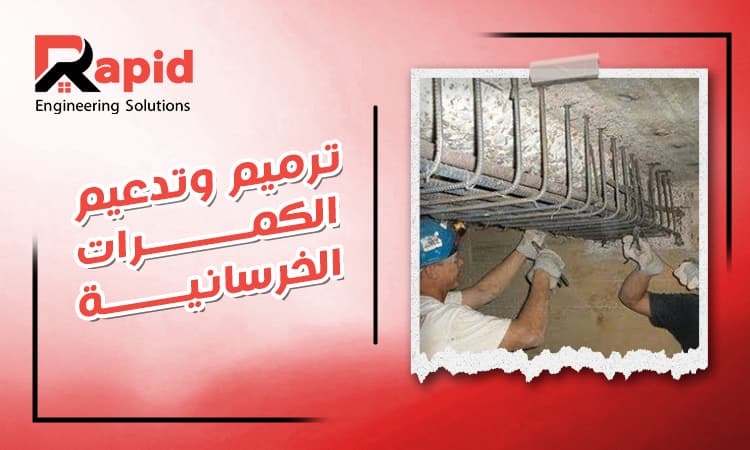
- The concrete jacket method is used to treat and strengthen columns in the above cases. The dimensions of the jacket, the diameters and number of reinforcing steel bars are determined according to the strengthening requirements and the reasons that prompted its implementation, through the following steps:
- Remove the plaster layers and thoroughly clean the surface of the concrete column.
- Sand all surfaces in a way that ensures a suitable roughness without affecting the integrity of the column.
- Planting dowels to connect the new stirrups of the shirt in both directions, at intervals ranging between 25 and 50 cm, by making holes in the surface of the column with a diameter 2 mm greater than the diameter of the dowels.
- Clean the holes thoroughly using compressed air, then coat them from the inside with epoxy material (Kemaboxy 150), then fill them with Kimapoxy 165 mortar and fix the dowels, taking into account that the length of the dowels is suitable for connecting them to the new stirrups using binding wire.
- Dowels can also be planted in reinforced concrete foundations or beams, depending on the case, taking into account that the diameter of the holes should be 2 to 4 mm larger than the diameter of the dowels, and their depth should be 5 to 7 times the diameter of the dowels.
- During the structural beam repair, the holes must be cleaned with compressed air, then coated with Chemaboxy 150 and filled with Chemaboxy 165 mortar, and the dowels must be firmly fixed.
- First, install the vertical steel bars, then install the stirrups according to the approved column jacket design.
- Paint the surface of the column with Chemaboxy 104 to bond the new concrete to the old, with the necessity of pouring the jacket concrete before the paint layer dries.
- The jacket is poured using non-shrink concrete consisting of fine aggregate (fino), sand and cement at a ratio of not less than 400 kg/m³, with the addition of shrinkage inhibitors such as Adicrete BVS or Adicrete BVF at a ratio of not less than 6 kg/m³.
- The concrete jacket is poured either using a shotcrete gun or through traditional formwork, with openings made in the formwork and roof slab, and the jacket is poured in stages to ensure quality of execution and achieve the best results in treatment and strengthening.
Read more about : concrete floor paints
Methods of reinforcing concrete beams
The restoration and strengthening of concrete beams is resorted to when defects appear in the structural elements that lead to a decrease in their ability to withstand the various stresses to which the building is exposed. In this case, it becomes necessary to take appropriate measures to restore these elements to their original structural efficiency or improve their performance.
Concrete structures are susceptible to various types of damage due to a number of factors, the most important of which are:
- Natural disasters such as earthquakes.
- Deficiencies in the structural design or neglect of structural details.
- Implementation errors or poor work quality.
- Corrosion and rusting of reinforcing steel.
- Changing the function of the facility, such as adding a new floor or increasing loads.
Therefore, the trend is to structural beam repair instead of demolishing and rebuilding the structure, as this saves time and money. Currently, many methods of strengthening and reinforcing buildings are available, which are economically viable and relatively easy to implement, and can be applied to a single structural element.Like pillarsOr the awards, or on the entire facility.
This method is a common technique for improving or restoring the load-bearing capacity of reinforced concrete elements. The dimensions of the jacket and the number and diameters of the reinforcing bars are determined based on the structural analysis of the element to be reinforced.
The types of concrete jackets vary depending on the location of the element to be reinforced within the structure, and some of the most important types are:
1- Columns:
Concrete beams are repaired and reinforced in this way when there is damage to the concrete or the concrete cover falls off, as a result of weak concrete strength or loads exceeding the design values. Here are the implementation steps:
- Temporarily supporting the beams carried on the column using wooden supports.
- Peeling and thoroughly cleaning the faces of the concrete column.
- Installation of longitudinal reinforcement bars and stirrups for the jacket.
- Install the mold and then pour the concrete.
2- Awards (Jizan):
One of the most prominent signs of weakness in beams is the appearance of cracks resulting from their inability to resist bending moments, in addition to diagonal cracks near the supports. Here is the method of implementation:
- Temporarily reinforce the slab adjacent to the beam using wooden trusses.
- The three sides of the prize are chipped and cleaned with water or compressed air.
- Drill holes in the slab next to the two faces of the beam.The vertical onesAt intervals ranging between 40 and 60 cm and with a suitable diameter.
- Installation of longitudinal and transverse reinforcing steel.
- Install the wooden formwork and then pour the concrete.
3- Foundations:
Concrete beams are repaired and reinforced with a concrete jacket if the soil's bearing capacity is less than the design values, or if there is weakness in the foundation itself, or if there is a need to increase the design load. These cases may lead to the appearance of cracks in the structural system that require reinforcement and treatment. Here are the implementation steps:
- Excavating to uncover the edges of the foundation down to the level of the foundation soil.
- The side faces and top surface of the foundation are drilled and cleaned with compressed air or water, then sprayed with cement grout.
- Treat any honeycombing using cement mortar.
- Installing the shirt's reinforcing steel with the wooden side molds.
- Pouring concrete.
- Advantages of concrete jacketing reinforcement:
- Easy pouring, compaction and surface leveling.
- High ability to resist large negative moments.
- It is one of the best methods for reinforcing shear walls and foundations.
- It provides good thermal insulation.
Metal jacketing is also used in beams when vertical cracks in areas of large moments, as well as diagonal cracks near supports, are less severe compared to cases where reinforcement is done using a concrete jacket.
What materials are used in the restoration of concrete structures?
A range of specialized materials are used in the repair and reinforcement of concrete beams. These materials aim to restore structural integrity and protect concrete elements from future damage, and they vary depending on the type of damage.And the reasonAmong the most important are:
- Concrete repair materials
- Polymer-modified cement mortar: used to fill surface cracks and replace worn parts.
- Non-shrink grout:RepairGaps under bases and columns.
- Epoxy materials
- Epoxy resins: for injecting micro-cracks and bonding cracked concrete parts.
- Epoxy adhesive: To increase the bond between old and new concrete.
- Injection materials
- Epoxy injection: for deep structural cracks.
- Polyurethane (PU) injection: for treating active cracks and preventing water leakage.
- Corrosion protection materials
- Anti-corrosion materials for reinforcing steel: used before restoration to protect the steel from corrosion.
- Protective paints: for resistance to moisture and chemicals.
- Fibers and composite materials
- Carbon fiber (CFRP): To reinforce beams and columns and increase their load-bearing capacity.
- Glass fiber (GFRP): Used in some light reinforcement work.
- Concrete improvement additives
- Adhesion-enhancing agents.
- Materials that reduce permeability and increase resistance.
- Insulation materials
- Waterproofing materials: to protect the structure from water leakage.
- Chemical insulation materials: to protect concrete from salts and aggressive substances.
- Choosing the right restoration material depends on:
- Type and extent of damage.
- Location of the concrete element.
- Surrounding environmental conditions.
Read more about : epoxy paint for floors
Steps for implementing beam restoration
Restoration and reinforcement work on concrete beams requires adherence to precise and well-thought-out procedures in order to restore the structural efficiency of the building and maintain its safety and long-term sustainability. These procedures include a set of basic steps:
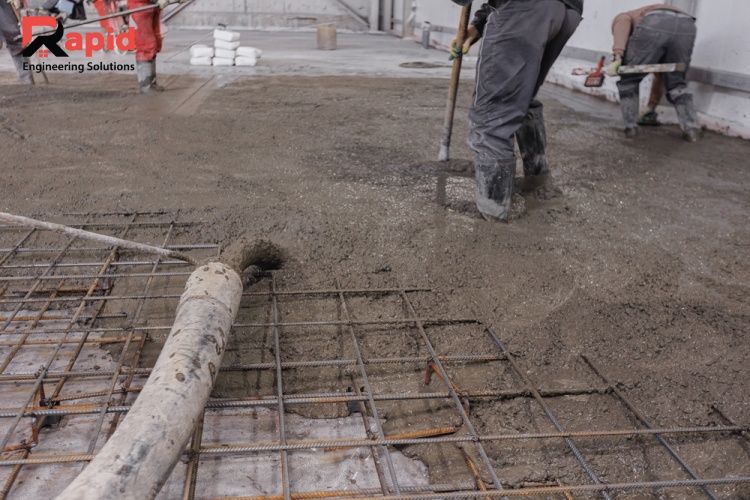
- Restoration work begins with a comprehensive inspection of the concrete structure using advanced methods and techniques to accurately identify the locations of damage and the degree of its impact, then carefully removing the damaged parts while ensuring that the sound elements of the structure are not affected.
- Afterwards, the affected surfaces are thoroughly cleaned using air or pressurized water to remove dirt and impurities, ensuring the best degree of adhesion between the old concrete and the new restoration materials. Then comes the stage of treating cracks, repairing and strengthening the concrete beams, and using appropriate restoration materials. Epoxy is used to treat fine cracks, while larger cracks are treated using modified cement mortar to increase bonding and structural strength.
- In the event of structural weakness in load-bearing elements such as columns and beams, the structure is reinforced using carbon fibers, metal sheets, or steel supports in order to increase load-bearing capacity and improve structural performance. After the reinforcement work is completed, the surfaces are leveled and the final finishes are treated to ensure durability and a good appearance at the same time.
In the final stage, all work is thoroughly reviewed to ensure compliance with engineering standards and proper execution before project handover. To guarantee the highest quality and professionalism in these steps, it is recommended to collaborate with specialized and reputable companies such as Rapid, which provides highly qualified engineers and state-of-the-art technologies for structural beam repair. This ensures the restoration of structural integrity and the preservation of building safety in accordance with the latest international engineering specifications and standards.
Latest posts
Apr 30
Interior Concrete Floor | Modern Design, Benefit & Cost 2026
Apr 29
Best Thermal Insulation Panels for Energy Efficiency in 2026
Apr 29
Best Waterproofing for Roofs | Ultimate Guide Protection
Apr 22
Top Industrial Flooring Company 2026 | Best Solution surface
Apr 19
Best Roof Thermal Insulation Sheet Price in Egypt 2026
.jpeg&w=3840&q=75)
Apr 11