

blog details
30
Dec
Concrete Rehabilitation Solutions for Damaged Structures
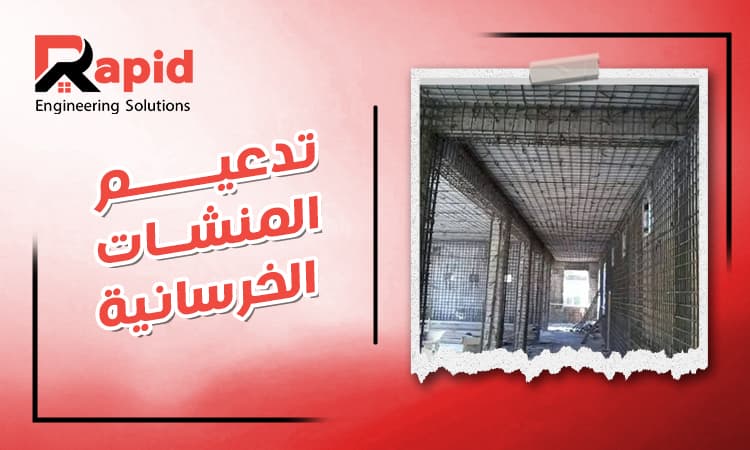
Concrete structures are the foundation of any building or structure, and over time or as a result of loadsDue to excess, earthquakes, corrosion, or construction defects, these structures may be exposed to weakness or cracks that affect their performance and safety. Hence the importance of concrete rehabilitation, which aims to raise the efficiency of the structural elements, increase their resistance to loads, and ensure the continuity of the structure without the need to demolish and rebuild it.
Rapid is a leading company in the field of concrete reinforcement, providing integrated engineering solutions for strengthening columns, slabs, and walls, using the latest materials and technologies such as concrete and metal jackets and polymer fibers, while adhering to the highest standards of quality and safety to ensure the sustainability of structures and achieve the highest levels of structural safety.
When does a building need structural reinforcement?
concrete repair is resorted to when defects appear in the structural elements that lead to a decrease in their ability to resist the various stresses to which the building is exposed. In this case, it becomes necessary to take appropriate measures to restore these elements to their original structural efficiency.
Concrete structures are susceptible to various types of damage due to a number of factors, most notably:
- Natural disasters such as earthquakes.
- Deficiencies in the structural design and neglect of technical details.
- Errors or poor execution
- Corrosion and rusting of reinforcing steel.
- Changing the function of the facility, such as adding a new floor or increasing the loads on it.
For these reasons, reinforcing concrete structures is a practical and effective choice that eliminates the need to demolish and completely rebuild the structure. Currently, many modern methods are available for strengthening and reinforcing buildings, which are economical and easy to implement, and can be applied to a single structural element such as beams or columns, or used to reinforce the entire structure as needed.
Read more about : structural beam repair
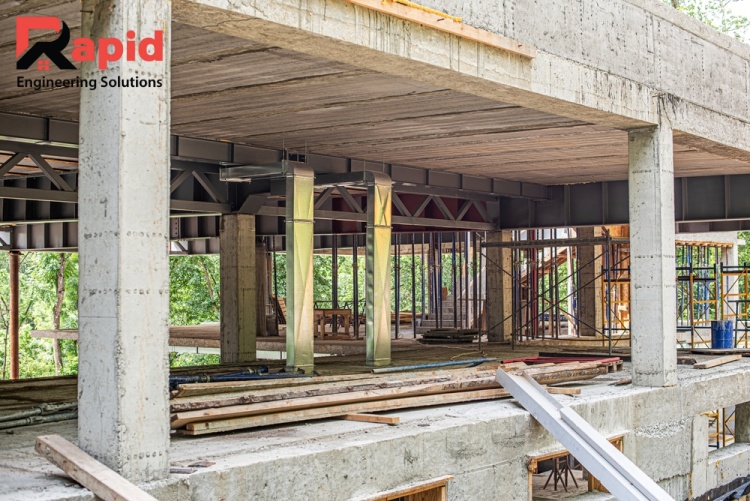
The most common methods of reinforcing concrete structures in Egypt in 2025
- Reinforcement using a concrete jacket
- Reinforcement with a concrete jacket is one of the most common methods of strengthening structural elements, where the dimensions of the concrete section of the element to be reinforced are increased by adding a new layer of reinforced concrete around it.
- This method aims to increase the element's ability to bear loads and improve its resistance to various stresses, especially in columns and beams. It is also widely used in cases of weak sections or increased design loads.
- Reinforcement using a metal jacket
- Metal jacketing reinforcement relies on surrounding the structural element, especially columns, with steel plates or sections that are tightly fastened.
- This method contributes to increasing the element's resistance to compression and shear, and is characterized by speed of execution and minimal impact on the dimensions of the structure compared to the concrete jacket, making it a suitable option in structures that require limited structural intervention with high efficiency.
- Reinforcement using polymer fibers
- Reinforcing concrete structures using fiber polymer reinforced (FRP) is a modern and advanced method in the field of concrete rehabilitation, where strips or rolls of high-strength fibers such as carbon fiber or glass are glued to the surface of the structural element.
- This system is characterized by its light weight, ease of installation, and lack of increased self-loading on the structure. It also provides high efficiency in improving tensile, shear, and bending resistance without a noticeable change in the architectural shape.
- Reinforcement using carbon fiber
- Using carbon fiber (CFRP) to reinforce roofs is one of the modern and effective solutions for concrete rehabilitation. It relies on wrapping or gluing high-strength carbon fibers onto the surface of the element to be reinforced, such as columns, slabs, or load-bearing walls.
- These fibers increase the element’s ability to resist tension, bending, and shear, while maintaining light weight and not increasing the dimensions of the structure, making it suitable for buildings with limited spaces or for existing columns and slabs.
Contact Rapid now to get expert engineering advice on reinforcing concrete structures.
Concrete column problems
Before beginning to cracks concrete repair and structural strengthening, it's essential to understand the different types of cracks in concrete. These cracks are common problems that directly affect the durability and integrity of concrete structures in buildings and pavements. They arise from several causes, most notably shrinkage, increased loads, and various environmental factors. Below, we review the most important types of cracks that can affect concrete:
- Plastic Settlement
- Plastic deposition occurs when water within fresh concrete moves downwards towards the soil, causing fine particles to settle and the mix to become uneven, resulting in cracks that often appear above the reinforcing steel or in weak areas of the concrete section.
- Plastic shrinkage
- Plastic shrinkage occurs when concrete loses water rapidly during the initial stages after pouring, especially in hot weather or when exposed to wind. This rapid water loss leads to surface cracks, which can extend into the concrete structure. Therefore, it is advisable to cracks concrete repair in columns and concrete rehabilitation as soon as they are noticed to prevent the problem from worsening.
- Early Thermal Contraction
- Premature thermal shrinkage results from a drop in concrete temperature during the early stages of hardening. The concrete cools rapidly and shrinks unevenly, leading to surface or internal cracking. These cracks can be minimized by using additives that reduce the effects of thermal changes.
- Long-term drying shrinkage
- This type of shrinkage occurs due to the concrete losing water over the long term after hardening, leading to gradual cracking that may affect structural performance if not properly treated.
- Mosaic cracks (Crazing)
- Mosaic cracks appear on the surface of concrete as a result of rapid drying, and they take the form of a network of fine cracks. They often affect the surface appearance more than the structural effect, which requires strengthening the concrete structures.
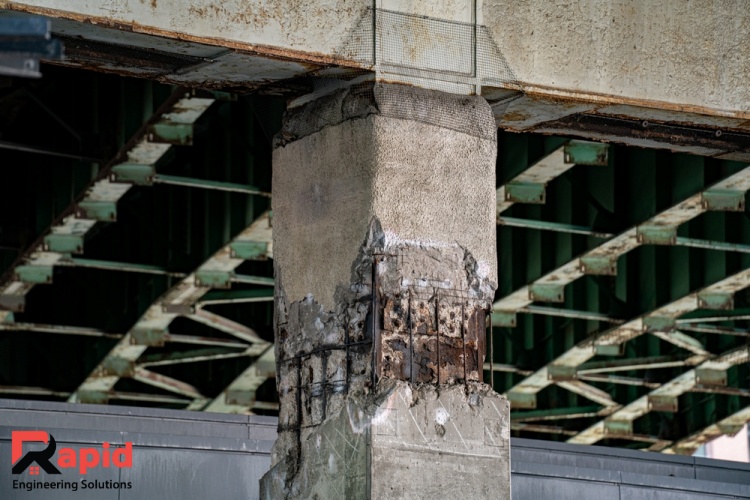
- Corrosion of Reinforcement
- Corrosion of reinforcing steel occurs when it is exposed to moisture or salts, which leads to the expansion of the steel inside the concrete and the occurrence of cracks and peeling in the concrete cover, and it is one of the most serious causes of weakness in concrete columns.
- Alkali-Aggregate Reaction
- This reaction occurs when the alkalis in cement react with certain types of aggregate, leading to internal expansion, cracking, and deterioration of the concrete over time.
- Expansion cracks
- Extension cracks arise as a result of the expansion of certain materials within the concrete, whether due to chemical reactions or environmental factors, leading to cracks in the concrete element that require strengthening the concrete structures, treating column cracks, and maintaining the integrity of the structure.
These different types of cracks indicate the importance of accurate diagnosis before starting treatment, as each type has its own causes and treatment methods. Early intervention is essential to maintaining the long-term durability and sustainability of the concrete structure. Inquire now with Rapid about reinforcement methods using concrete, steel, or carbon fiber jackets.
Read more about : thermal insulation company
The difference between restoring and reinforcing structures
|
Comparison point |
Restoration of facilities |
Strengthening facilities |
|
Definition |
Works aimed at repairing visible damage and restoring the structural element to its original condition. |
Procedures aimed at increasing the load-bearing capacity of a structure or structural element |
|
Main objective |
Repairing cracks and damage caused by time or minor defects |
Increase structural efficiency and improve resistance to current or future loads |
|
Degree of intervention |
Limited intervention, often without fundamental changes to the structural system. |
A deeper structural intervention may involve changing or adding structural elements. |
|
Impact on loads |
It does not usually lead to increased endurance. |
This leads to an increase in the element's resistance to various loads. |
|
Cases used |
Surface cracks, minor erosion, concrete damage |
Weakness of elements, increased loads, change in use of the facility |
|
Examples of work |
Crack injection, rust treatment, concrete cover repair |
Concrete or metal jacket, polymer fibers, added structural elements |
Restoration can be used when there is limited damage that does not affect structural safety, while concrete rehabilitation is the most appropriate solution in the event of structural weakness or the need to raise the efficiency of the structure to meet new requirements.
Reinforcing concrete roofs
Reinforcing concrete roofs is an important structural procedure aimed at improving the roof's efficiency and increasing its load-bearing capacity, whether due to design flaws, changes in building use, or the appearance of cracks and subsidence that affect structural integrity. Roof reinforcement is resorted to when its structural capacity becomes insufficient for current or future loads.
Reasons for concrete rehabilitation include increased loads due to the addition of heavy equipment or a change in the building's function, the appearance of cracks or excessive sagging in slabs, poor execution or the use of non-compliant materials, in addition to the impact of environmental factors and the corrosion of reinforcing steel over time.
The methods of reinforcing concrete roofs vary according to the type of slab and the condition of the structural element. Among the most prominent are increasing the thickness of the slab by adding a reinforced concrete layer, or reinforcing it with polymer fiber sheets (FRP) to increase tensile and bending resistance, or using additional beams or girders to reduce spans, in addition to reinforcement with auxiliary metal roofs in some special cases.
The choice of the appropriate method for concrete rehabilitation depends on the results of the structural inspection and the precise engineering study, taking into account economic feasibility and ease of implementation, in order to ensure the restoration of the roof's efficiency and achieve the highest level of safety and sustainability for the structure.
Restoration of concrete structures exposed to corrosion
In concrete repair work, before adopting any initial treatment method, a comprehensive study must be conducted to identify the causes of failure and damage to the concrete element. For example, using liquid epoxy injection to treat cracks caused by overloads or thermal cracks may not provide a permanent solution if the root cause of the problem is not addressed. Therefore, analyzing the causes of cracking is a fundamental step towards achieving sustainable and effective repair solutions.
The method of building maintenance often determines the lifespan of concrete structure restoration and reinforcement works. The type of use of the structure may impose the selection of repair methods with a limited impact on the structure's performance during implementation. Climatic conditions may also affect the selection of the appropriate repair method. In some cases, it is necessary to modify the environmental conditions surrounding the structure to prevent future damage or recurrence.
Common methods for repairing and concrete rehabilitation include a number of techniques, most notably the recasting of concrete using concrete similar to the original concrete or concrete modified with additives such as microsilica, acrylic, styrene latex, or epoxy, in addition to solid concrete, shotcrete, and ready-mix concrete, as well as the injection of cement grout or chemical and cementitious compounds.
This method is used when the damaged area allows for the installation of formwork, pouring of concrete and compaction, where ordinary concrete similar to the original structure's concrete can be used to repair the damaged part.
This method is applied in cases of large cavities, such as voids in unreinforced concrete with an area exceeding 1000 cm² and a depth greater than 10 cm, or voids in reinforced concrete with an area exceeding 250 cm² and a depth exceeding 10 cm, as well as in cases of recessed
Read more about : concrete floor paints
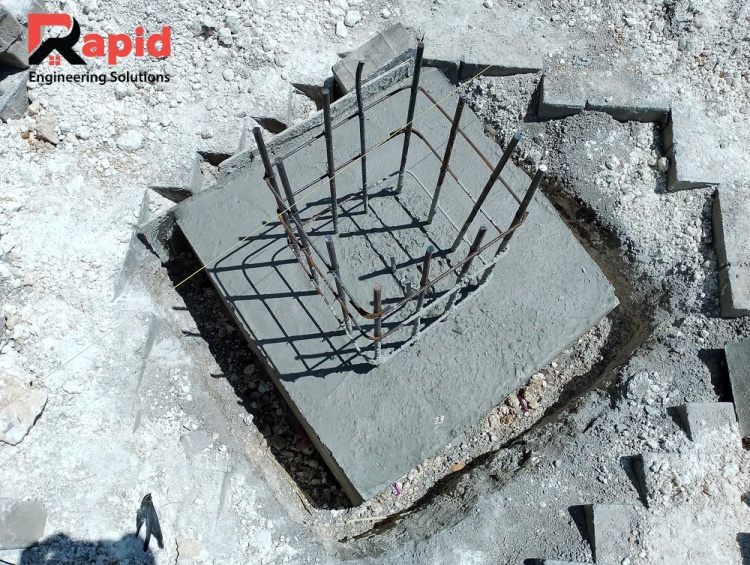
Methods of reinforcing cracked concrete columns
Rapid Company relies on a precise engineering methodology for reinforcing cracked concrete structures, starting with accurate diagnosis and ending with the implementation of effective and long-lasting reinforcement solutions. The company's reinforcement method consists of a series of integrated steps, rather than simply applying a single method haphazardly.
Initially, Rapid conducts a comprehensive technical inspection of the cracked columns, including identifying the type of cracks, their severity, and their causes, whether due to overloading, reinforcement corrosion, or environmental factors. This is followed by a detailed structural analysis to assess the column's remaining strength and determine the required level of reinforcement.
Following the assessment phase, the company selects the most suitable reinforcement method based on the structural condition, with Rapid relying on:
- Reinforce columns using concrete jackets in cases of severe damage or the need to increase bending and shear resistance, while ensuring strong bonding between the old and new concrete.
- Metal jacketing is used when there is a need to increase shear resistance and confinement with the least possible impact on column dimensions and speed of execution.
- Fiber polymer (FRP) is used in cases where high-efficiency reinforcement is required without increasing loads or compromising the architectural form.
Rapid Company is concerned with the quality of execution during the concrete rehabilitation, as it relies on preparing the surfaces, treating cracks and injecting them with specialized materials before starting the reinforcement, to ensure the restoration of structural cohesion and prevent the development of cracks in the future.
The company is also committed to applying approved engineering standards and using high-quality materials, making its method of reinforcing concrete columns a safe, effective, and long-lasting solution.
Latest posts
Jan 07
Best Fire Resistant Paint for Steel Structures 2026
Jan 04
Fire Resistant Paints for Wood: Best Types, Uses & Prices
Dec 31
Epoxy Price in Egypt | Latest Costs & Installation Guide
Dec 30
Concrete Rehabilitation Solutions for Damaged Structures
Dec 28
Rock Wool Price: Latest Costs, Uses, and Buying Guide
Dec 28
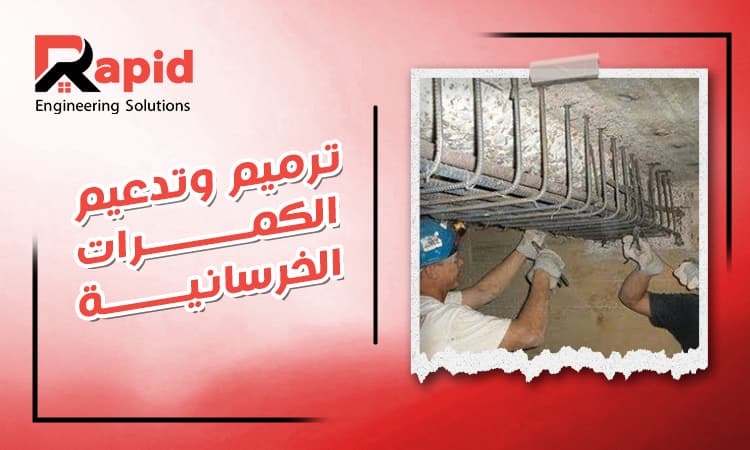
Structural Beam Repair: Causes, Methods, and Best Solutions
Dec 27
Top Concrete Floor Paints: Best Types, Prices, and Uses
Dec 22
Top Advantages of Rubber Insulation for Homes and Industries

Dec 18
Thermal Insulation in Homes Cost: Prices, Types, and Savings

Dec 15
Top thermal insulation company for Energy-Saving Solutions

Dec 11
Roof Thermal Insulation: Best Materials and Installation

Dec 09
Thermal insulation prices in Egypt: Types and buying tips

Dec 03
Cold Polyurea Price in Egypt | Updated 2025 Cost Full Guide
Dec 02
Cold Bitumen Uses, Benefits, and Best Application Methods

Nov 26
Epoxy paint for floors: Benefits, and Best Usage Guide

Nov 19
thermal insulation board against fire

Nov 18
insulation foam price 2025: Cost Factors and Key Benefits

Nov 18
Polyurethane price in Egypt 2025

Nov 14