blog details
08
Mar
Wall Insulation from Heat Cost in Egypt 2026
With the continuous increase in energy prices and electricity bills, rationalizing consumption is no longer a secondary choice but a real necessity for every home. Wall insulation stands at the forefront of effective solutions in terms of efficiency and cost; it contributes to reducing energy loss by up to 40%, in addition to maintaining the efficiency of cooling devices and extending the lifespan of the building.
In this article, we explain how a simple layer of wall insulation can transform into a long-term investment that saves expenses and protects the environment.
Why is Wall Insulation a Necessary Investment?
Insulating walls thermally is not just a solution for high temperatures or extreme cold; it is a calculated investment step that achieves multiple benefits in the short and long term. The most prominent benefits of wall insulation include:
- Reducing electricity consumption: Wall insulation acts as a barrier that prevents cold air from leaking out and limits heat from entering, which reduces the load on air conditioning units and significantly lowers energy bills.
- Extending the building's lifespan: It protects the concrete structure and building materials from the effects of expansion and contraction caused by constant temperature changes, reducing the likelihood of cracks over time.
- Achieving stable thermal comfort: It helps maintain a balanced temperature inside rooms throughout the year, providing a more comfortable living environment.
- Reducing external noise: Many materials used in wall insulation have the ability to absorb sound, contributing to noise reduction and providing peace and privacy.
Thus, wall insulation combines economic savings, structural protection, and daily comfort all at once.
Learn more about : thermal insulation company
The Difference Between Internal and External Wall Insulation
When considering thermal insulation for walls, an important question arises: Is it better to choose Internal wall insulation or External wall insulation? Each method differs in terms of efficiency, cost, and implementation nature.
|
Comparison |
External wall insulation |
Internal wall insulation |
|
Location |
Installed on the entire exterior facades of the building. |
Installed to insulate walls inside the rooms. |
|
Efficiency |
Highest efficiency; it envelopes the building and prevents thermal bridges. |
Medium efficiency; prevents heat from entering the room, but the wall itself remains exposed. |
|
Protection |
Protects the concrete and walls from weather fluctuations. |
Does not provide direct protection to the external structure from weather elements. |
|
Space Impact |
Does not affect the internal room area at all. |
May slightly reduce room space depending on the thickness of the material. |
|
Common Use |
Suitable for new buildings, villas, and fully-owned properties. |
Suitable for apartments, especially on higher floors or when external work is difficult. |
|
Cost |
Often higher in Wall insulation cost and requires special scaffolding. |
Relatively lower Wall insulation cost and easier to implement in specific rooms. |
What are the Best Wall Insulation Materials?
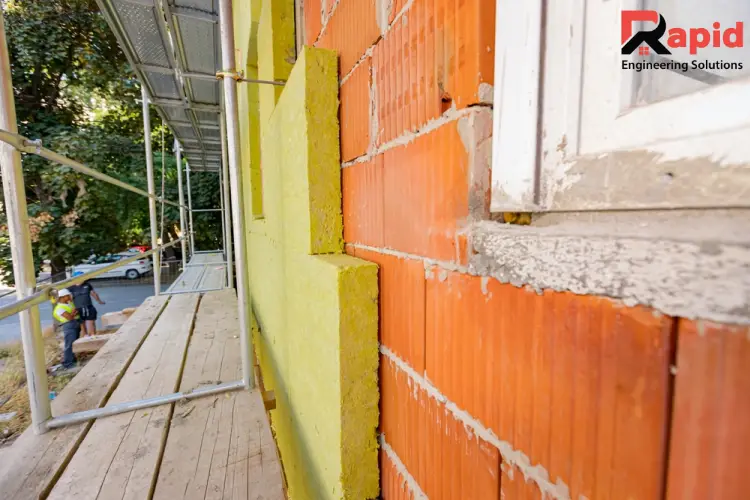
Various wall insulation materials are available in the market. Choosing the right type depends on the building's nature, budget, and the required insulation level. Professional implementation is essential, which is provided by Rapid Company:
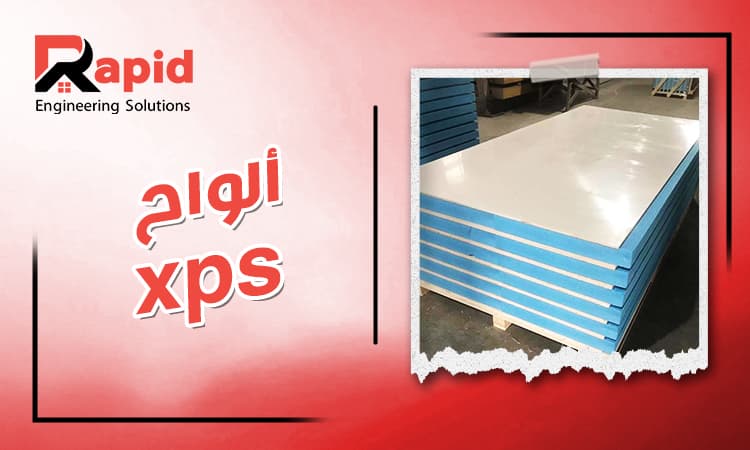
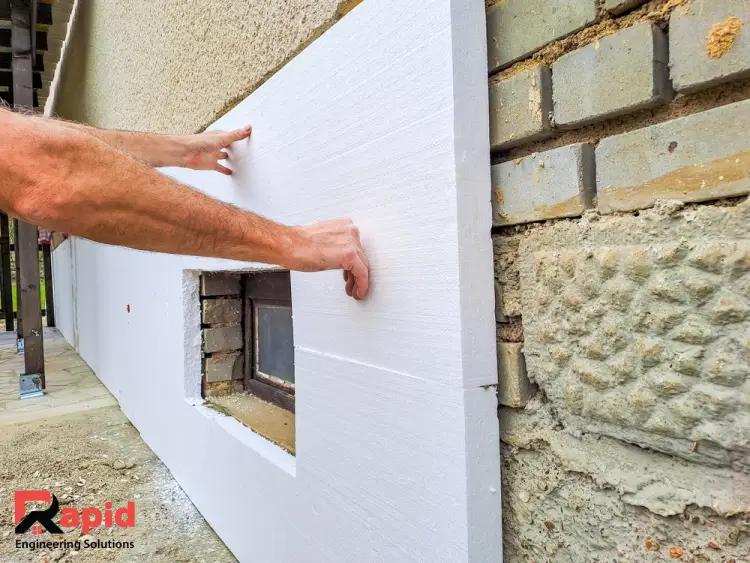
- Wall insulation panels (EPS and XPS Polystyrene): These are widely used due to their light weight and ease of installation, offering high efficiency at an economical Wall insulation cost.
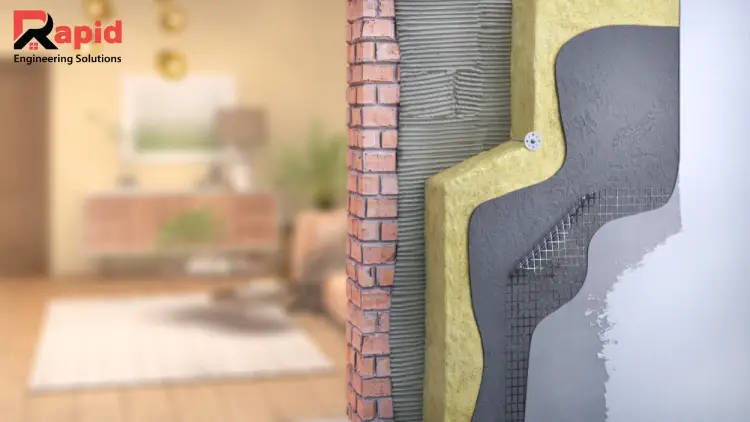
- Rockwool: The ideal choice for high performance, providing excellent wall insulation with strong soundproofing and fire resistance.
- Polyurethane Foam: A sophisticated technical solution applied by spraying to fill all gaps, ensuring a continuous layer of wall insulation without thermal bridges.
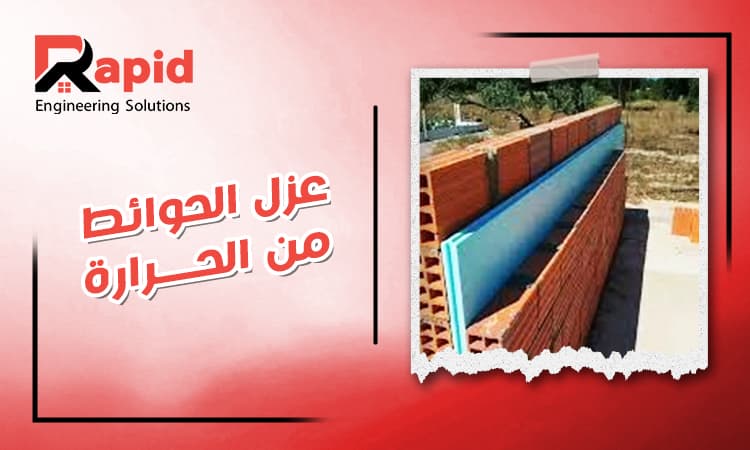
- Insulated Blocks: Used during the construction phase, where insulation is part of the wall structure itself.
Choosing the right material like Wall insulation panels with professional execution ensures maximum benefit from your wall insulation system.
Learn more about : damp proofing
Professional Wall Insulation Steps by Rapid Company
Quality lies in the details. Rapid Company relies on a precise engineering methodology that makes thermal wall insulation a long-term investment.
- Inspection and Proactive Treatment: We start with a technical inspection to treat any cracks or moisture before applying wall insulation.
- Infrastructure Setup: Installing metal or wooden frames or using high-quality adhesives to fix the Wall insulation panels directly.
- Material Installation and Sealing: Fixing materials like foam or rockwool professionally to prevent "thermal bridges" that could reduce the efficiency of the wall insulation.
- Final Coating: Using gypsum board or fiber mesh to ensure a durable wall with a sophisticated aesthetic appearance.
Wall Insulation Cost Factors
The Wall insulation cost varies according to several technical factors, and a fixed price cannot be determined before an inspection. Key factors include:
- Wall Area: The total area to be covered with wall insulation.
- Material Type: Prices vary between Wall insulation panels, rockwool, or polyurethane.
- Finishing Method: Whether using gypsum board or plastering with fiber mesh.
For an accurate quote regarding Wall insulation cost, contact Rapid Company for a technical inspection.
Learn more about : glass wool price
FAQs
Does Internal wall insulation reduce room space significantly?
No, it reduces space very slightly depending on the thickness of the material.
Can I insulate just one wall?
Yes, you can apply wall insulation to the wall most exposed to the sun, although full room insulation is more efficient.
What is the lifespan of wall insulation?
High-quality wall insulation lasts between 20 to 50 years depending on the material and installation quality.
.jpeg&w=3840&q=75)