blog details
.jpeg&w=3840&q=75)
11
Apr
Complete Guide to Epoxy or Polyurea Coatings in 2026
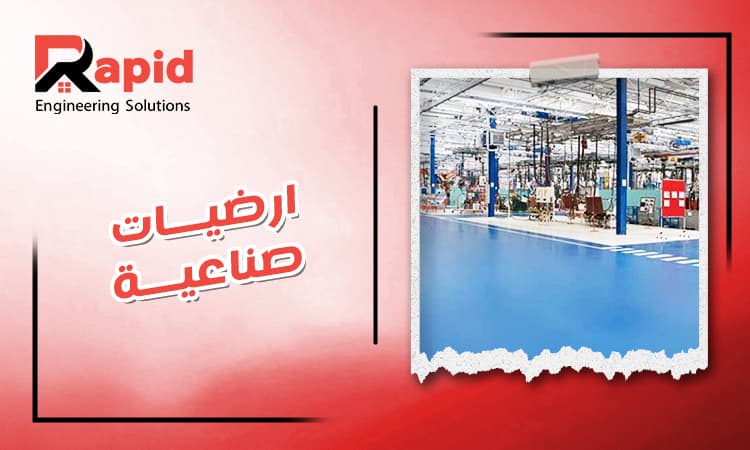
Factories face significant challenges when choosing the right flooring. Constant humidity, heavy loads, and abrasion from equipment and machinery are all factors that affect floor performance and efficiency. Additionally, production downtime for floor installation or maintenance represents a major financial loss, making the choice of the optimal solution vital. In this context, the question arises: epoxy or polyurea?
What is the Fundamental Difference?
The core difference between epoxy or polyurea lies in their chemical composition and performance on the floor.
- Epoxy: An industrial coating based on the reaction of epoxy resin with a hardener to form a very rigid layer. It is known for high hardness and chemical resistance but is less flexible and sensitive to moisture during installation.
- Polyurea: A polymer characterized by rapid reaction and superior adhesion, forming a flexible layer resistant to impact, heat, and moisture. Polyurea flooring can be applied quickly over large areas and resists cracks from heavy loads.
Comparison Table: epoxy or polyurea
|
Feature |
Epoxy |
Polyurea |
|
Flexibility |
Low |
High |
|
Execution Speed |
Slow (days to dry) |
Very Fast (hours) |
|
Lifespan |
5–10 years |
10–20 years |
|
Price |
Average |
Slightly Higher |
learn more about : thermal insulation company
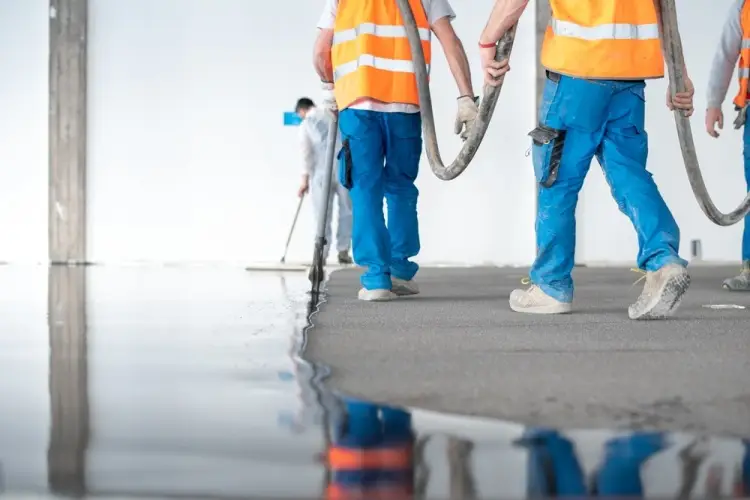
Hot Spray Polyurea: Maximum Strength
Hot spray polyurea is the ultimate solution for industrial floors requiring maximum strength and durability. Applied via thermal spray, it forms a cohesive, ultra-tough, yet flexible layer. One of its key advantages is the cure time; the floor is ready for use within seconds, drastically reducing downtime—a critical factor when comparing Polyurea vs epoxy.
Cold Polyurea: The Smart Solution
When considering epoxy or polyurea, some prefer Cold Polyurea for its ease of application using rollers or brushes. It is a practical and economical choice for tight spaces or small to medium projects. While easier to apply, it is less rigid than the hot-sprayed version but remains a strong contender in the Polyurea floor coating vs epoxy debate for medium commercial uses.
learn more about : polyurea insulation
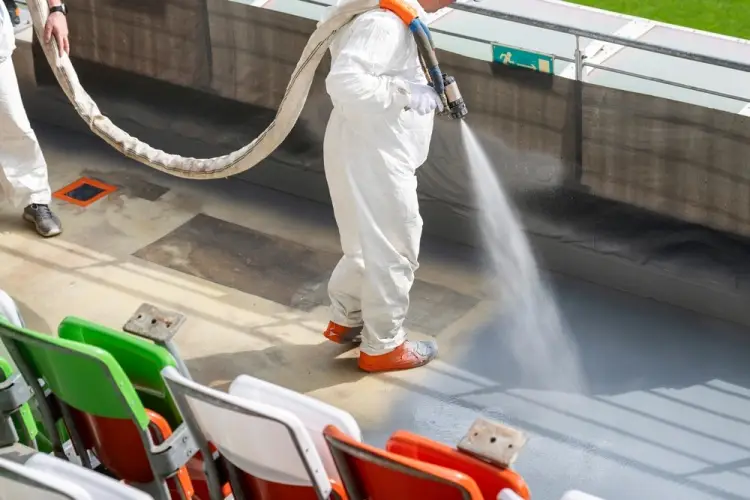
Why Polyurea Outperforms Epoxy in Factories?
When choosing between epoxy or polyurea, Polyurea clearly wins in industrial settings where time is crucial. While epoxy takes days to dry, Polyurea cures in hours, allowing production to resume quickly. Furthermore, its superior resistance to chemicals, oils, and heat makes it more capable of facing harsh factory conditions compared to traditional coatings
Points to Consider (Scientific Integrity)
Despite its advantages, there are factors to keep in mind regarding Polyurea flooring:
- Initial Cost: It is relatively more expensive than epoxy. However, when analyzing Polyurea vs epoxy garage floor cost over time, it proves to be a smart investment due to reduced maintenance.
- Specialized Application: It requires professional technicians. Companies like Rapid (Rapid-EG) provide expert teams to ensure efficient application and long-term durability.
learn more about : epoxy paint for floors
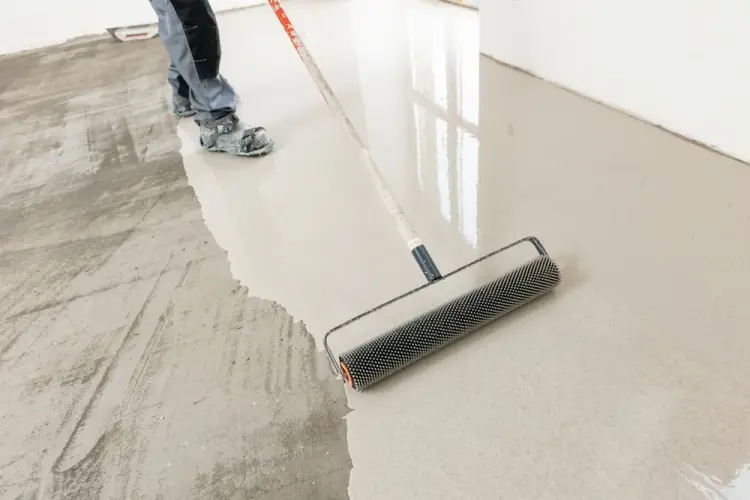
Common Uses of Epoxy
When discussing epoxy or polyurea regarding applications, Epoxy is widely used for:
- Factory and warehouse floors for heavy-duty durability.
- Commercial floors and offices for a glossy aesthetic.
- Laboratories and hospitals for chemical resistance.
- Marine works and ships to protect against corrosion.
Conclusion: epoxy or polyurea?
Whether you need a coating for high-traffic industrial environments or a quick-drying solution for smaller projects, Rapid provides the perfect answer. Our experts at Rapid are ready to offer customized consultations to ensure premium performance and longevity for your floors. Contact Rapid today to discover how our professional coating solutions can meet your requirements.
.jpeg&w=3840&q=75)