blog details

19
Jan
Concrete Floor: Types, Installation Methods, and Prices
When we think about building a new factory, our thoughts always go to the machines and production lines, but we often forget the most important element that connects all of this system together, which is the floor. The floor is not just a concrete surface that we walk on, but it is the "foundation" that withstands all the pressures of daily work.
Imagine the weights that the factory floor bears, from forklifts and giant machines to the constant movement of workers and goods. If this floor is not constructed correctly and to specific standards, it will quickly become a source of problems such as cracks, dust accumulation, and difficulty in cleaning, which may disrupt work and cost huge sums to repair.
Therefore, strong factory concrete floor are a real investment for any factory owner as they guarantee a safe working environment, are easy to clean, and will last for many years without problems. In the following lines, we will learn simply about the importance of these floors and how to choose the right one for your project.
The importance of choosing the right concrete flooring for factories
Epoxy flooring for food factories represents a breakthrough in advanced industrial solutions; it goes beyond being just a surface layer to become a fundamental pillar in the safety and quality system.
These floors are designed to meet the strictest health and operational standards, combining superior durability with the ability to provide a safe and sterile working environment.
The importance of choosing suitable concrete flooring for factories lies in the following:
- Superior hygiene standards: It features a smooth, non-porous surface that prevents germ colonization, and it is naturally resistant to bacteria, mold, and fungi.
- Strong durability: It has a high capacity to withstand the movement of heavy equipment and heavy use, with amazing adhesion strength to concrete surfaces.
- Chemical resistance: It withstands acids, oils, strong detergents, and constant moisture, as well as temperature variations.
- Safety and security: It provides a safe, slip-resistant surface (with customizable roughness), and its varied colors help visually define work paths.
- Ease of maintenance: It features a long lifespan, complete ease of cleaning and repair, with complete flexibility in choosing the appropriate thickness and design for each area within the factory.
- Standard compliance: Fully compliant with the requirements of global food safety and occupational health authorities.
Read more about : thermal insulation company
Types of concrete factory floors and the most durable ones
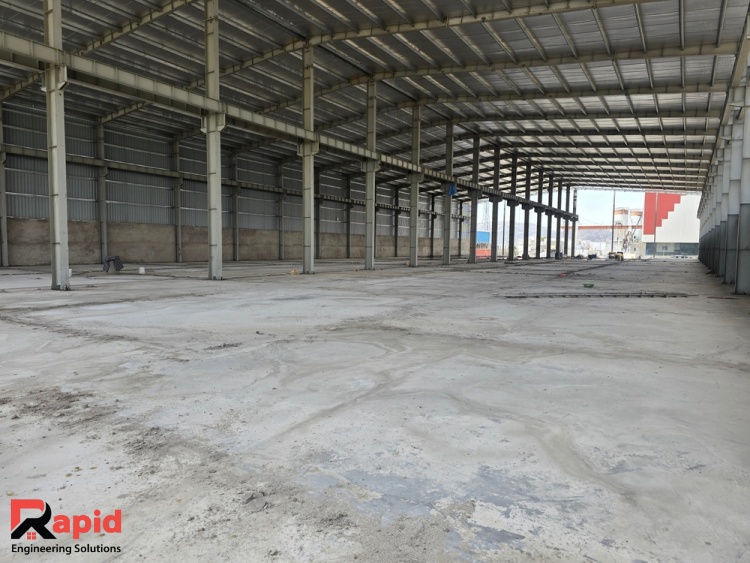
There are many epoxy systems used for treating concrete floors, and the optimal type is chosen based on the nature of the activity and the expected operational stresses. Here is a breakdown of the most prominent types of concrete flooring for factories:
- Epoxy Coatings
- It is the most widespread and economical solution, especially in the Egyptian market, and is characterized by the following:
- Usage: Ideal for spaces with light loads, such as administrative offices, corridors, and light storage warehouses.
- Advantages: It gives a shiny and attractive appearance, is very easy to clean, is resistant to fading and staining, and is easy and quick to apply.
- Solid Epoxy Flooring
A two-part system (base and top layer) provides high durability and long-term sustainability:
- Usage: Best choice of concrete flooring for factories and areas that require a strong and uniform surface.
- Advantages: Superior ability to adhere to various surfaces (concrete, metal, wood), and excellent resistance to oils, greases and most chemicals.
- Epoxy mortar flooring
- It is classified as the strongest epoxy system ever, featuring a thickness ranging from 3 to 5 mm (not cm as has been mistakenly claimed in some descriptions) to ensure maximum durability:
- Usage: Treating deep cracks in concrete, and areas subjected to very heavy loads and intense mechanical movement.
- Advantages: It consists of multiple layers that give it a superior ability to absorb shocks and high pressures.
- Epoxy Terrazzo Flooring
- This system combines strength and aesthetics, and is considered one of the finest industrial systems:
- Usage: Places with very high traffic such as airports, hospitals, hotels, and large production halls.
- Advantages: The best concrete flooring for factories as it has exceptional resistance to abrasion and friction, anti-slip properties, and provides a solid decorative surface that lasts a long time.
- Metallic Epoxy Flooring
- The latest flooring trends that blend industrial solidity with innovative artistic designs:
- Usage: High-end commercial spaces such as restaurants, cafes, and galleries, and it is considered a modern alternative to ceramics and marble.
- Advantages: High rigidity with 3D visual effects. Rapid is a pioneer in introducing and implementing this technical art in Egypt.
Technical specifications for industrial flooring
Factory Concrete floor are subject to rigorous engineering standards to ensure their resistance to structural loads and harsh operating conditions. Key quality parameters include:
- Concrete and additive strength: High-strength concrete with a strength of no less than 350 kg/cm² is used, with the integration of improved chemical additives that enhance durability and increase surface resistance to mechanical abrasion.
- Reinforcement and load distribution: The structural framework of the floor is supported by carefully designed steel reinforcement networks, which aim to distribute pressures and weights in a balanced way, thus protecting the floor from the risk of sudden subsidence or the appearance of structural cracks.
- Slump Test: The "slump ratio" of the concrete is carefully controlled to ensure a smoothness that allows for a homogeneous and complete pour, without negatively affecting the final cohesive strength of the building.
- Surface treatment and joints: The implementation of Factory Concrete floor is based on creating a solid leveling layer with high abrasion resistance, with the distribution of expansion and contraction joints according to precise calculations to avoid cracks resulting from thermal changes, in addition to applying moisture insulation systems in environments that require special protection.
Read more about : concrete floor paints
Steps for implementing factory flooring from foundation to finishing
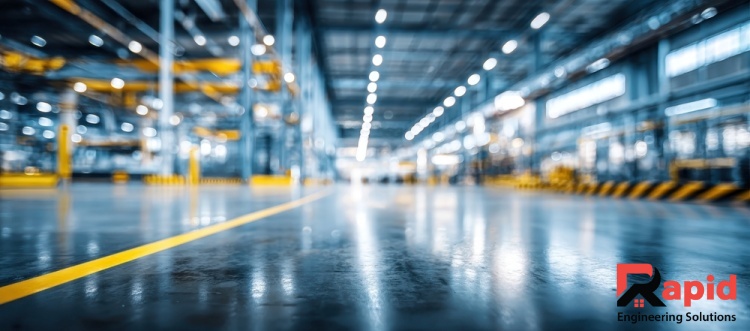
The installation of concrete floors in food processing plants requires a meticulous protocol to ensure compliance with health and operational standards. The installation process is carried out in the following stages:
First: Surface Preparation
The process begins by preparing the concrete floor by removing all contaminants such as oils, grease, and dirt. This stage also includes repairing structural cracks and treating joints to ensure a solid and perfectly level base.
Second: Mechanical grinding and leveling
Diamond sanders and grinding machines are used to remove weak concrete layers and protrusions, creating porosity that allows coating materials to penetrate. This is followed by a thorough surface leveling process using specialized curing agents.
Third: Foundation (Primer Coat)
The primer layer (base) is applied to enhance the bonding strength between the concrete and the following layers. This layer acts as a bonding bridge that prevents the epoxy from separating from the floor in the future, and is left to dry completely.
Fourth: Preparing the artistic mix
The components (whether epoxy, polyurethane, or others) are mixed using mechanical mixers, with strict adherence to the technical ratios and schedule specified by the manufacturer to ensure the correct chemical reaction.
Fifth: Pouring and distributing the structural layer
The mixture is distributed onto Factory Concrete floor using specialized tools (such as a toothed trowel or roller), taking into account the required "micron thickness" that corresponds to the expected loads and pressures inside the factory.
Sixth: Getting rid of air bubbles (De-aeration)
Spiked rollers are used to pass over the mixture while it is still liquid in order to ensure that trapped air bubbles are expelled, thus ensuring a dense surface free of microscopic holes that may harbor bacteria.
Seventh: Top Coat
After the base coat has set, the topcoat is applied, which determines the color and aesthetic appearance. At this stage, anti-slip granules or additional protective layers can be added to resist harsh chemicals.
Eighth: Hardening and Operation (Curing Phase)
The flooring is left to undergo final drying and chemical curing for a period of 24 to 72 hours. During this time, all on-site activity is prohibited to ensure the material reaches its maximum hardness before actual operation begins.
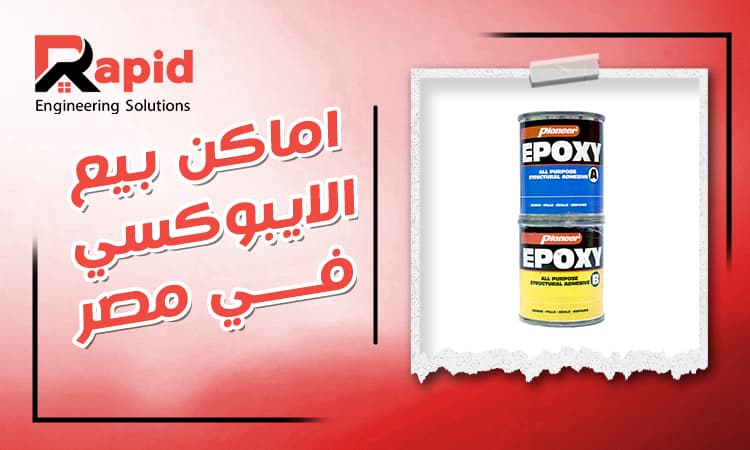
Learn more about the product Epoxy Coating Materials offered on our website.
Prices for installing concrete floors in factories in Egypt 2026
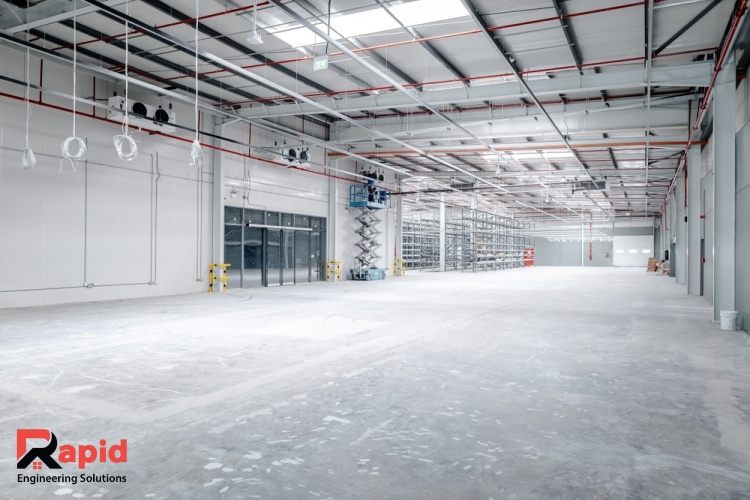
A fixed and uniform price cannot be established for industrial concrete flooring, as the cost is subject to several technical and logistical variables that determine the final project value. Among the most prominent of these factors are:
- System type adopted: Operating costs and materials vary depending on the required design. Polished concrete floors differ in their preparation from stamped concrete or decorative systems.
- Total project area: Work areas sometimes play a reverse role. While large areas increase material consumption, they may reduce the cost per square meter as a result of economies of scale and the distribution of equipment transportation costs.
- Finishing and treatment level: The cost increases as the final quality requirements rise, such as the degree of gloss, and the use of surface hardeners to increase friction resistance.
- Environmental conditions and special needs: Adding moisture insulation layers or chemical heat treatments to areas exposed to harsh conditions increases the cost of raw materials and implementation.
- Efficiency of execution and technical expertise: Using specialized and professional work teams ensures reducing waste and avoiding costly execution errors in the future, and is an investment that increases the operational value of the land.
In conclusion, Factory Concrete floor are a long-term investment that requires a careful balance between cost and quality. Because food factories and industrial facilities cannot afford mistakes, Rapid stands out as a leading strategic partner in this field.
At Rapid, we combine deep engineering expertise with the latest global technologies in casting and curing concrete and epoxy flooring. We don't just offer flooring; we provide comprehensive solutions that guarantee durability, safety, and adherence to the highest health and safety standards, while delivering the best value for money to ensure the sustainability and growth of your business.
.jpeg&w=3840&q=75)